_1773294067.png)
Key Takeaways:
- Specialize in a specific genre or segment and research the market thoroughly.
- Create a solid business plan covering services, commission rates, and finances, and set up the legal structure early.
- Recruit the right artists and build relationships with venues and promoters through networking and industry events.
- Use industry-specific software to manage contacts, calendars, contracts, and finances seamlessly (for example, YourTempo’s Booking Pro platform).
- Keep overhead low initially and grow your roster and team strategically as demand increases.
- Expect a challenging but rewarding journey: success usually comes after persistence, flexibility, and ongoing learning.
Starting a booking agency puts you at the center of the live entertainment industry, connecting performers with venues and coordinating events. A booking agent secures gigs for clients and handles every detail – from pitching artists to venues, negotiating fees and riders, to organizing travel and logistics. Agents typically work on commission (often10–20% of the artist’s fee) and must juggle multiple clients, time zones, and deadlines. This demanding role requires a strong work ethic, excellent networking skills, and patience – success often comes to those who enjoy the hustle and can handle setbacks with persistence.
Identify Your Niche and Research the Market
The live entertainment market is vast, so focus on a niche where you can excel. Ask yourself: which genres do you know best? What artists or market segments do you have connections with? Successful agencies often specialize (for example, a particular music genre, college circuit, corporate events, etc.) so they can build deep expertise. Research your competition: see who the major agencies are, which artists they represent, and where there are gaps (such as emerging genres or underserved regions). Identifying an underserved niche or geographic area can give a new agency room to grow without facing the toughest incumbents head-on.
Stay up-to-date with industry trends. For example, hybrid or virtual events and direct-to-fan promotion via social media continue to grow. Familiarity with data tools (analytics for ticket demand, streaming, etc.) can also give you an edge. Being aware of changes in audience behavior and technology ensures you pick artists whose styles fit current market demands.
Create a Business Plan and Legal Foundation
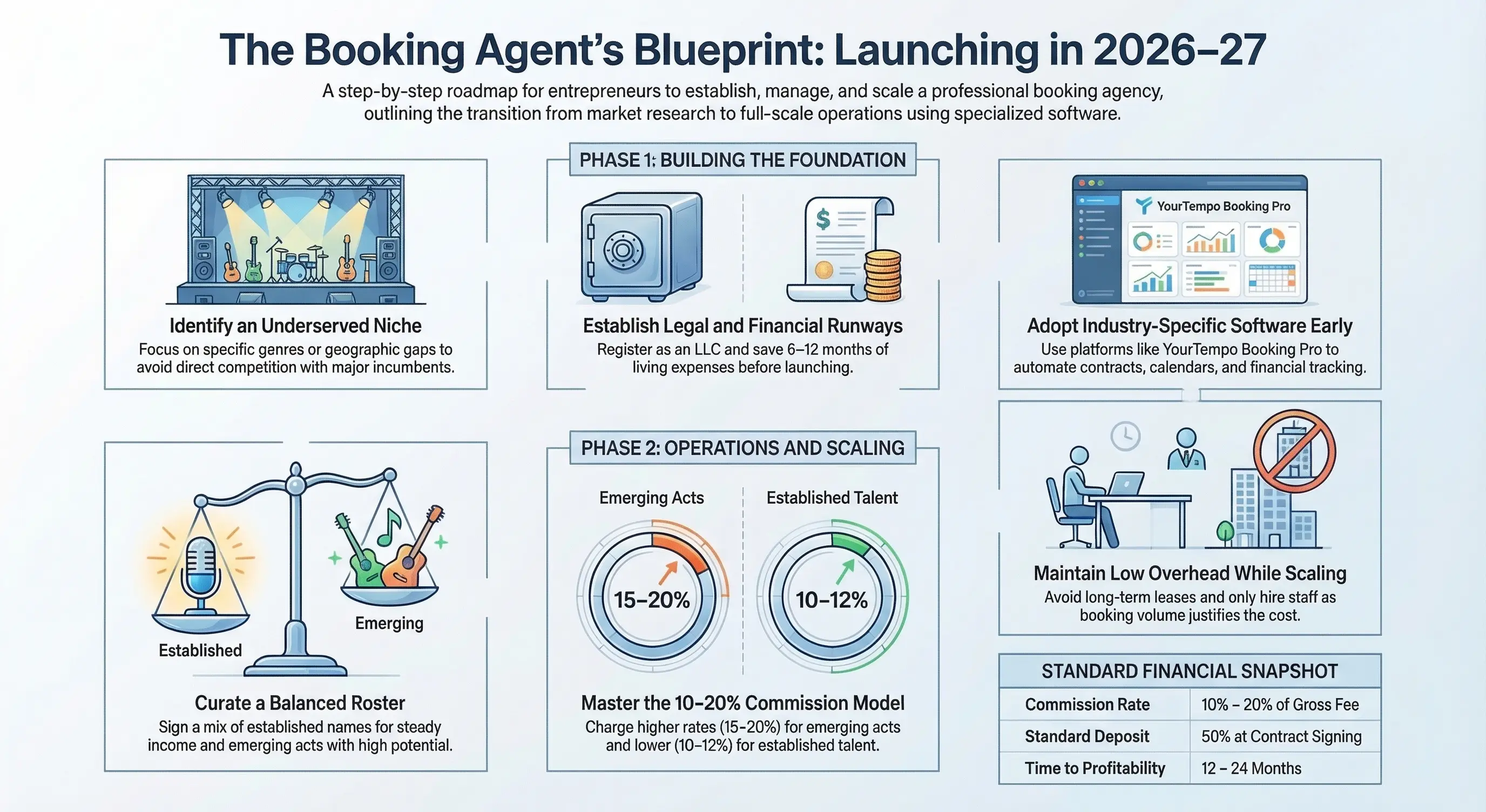
Treat your agency like any other business. Write a concise business plan that outlines your service offerings (e.g. booking only, or booking plus tour support, marketing, etc.), target clients (which artists and buyers you’ll focus on), and revenue model. Commission rates typically range from 10–20% of performance fees; emerging artists often pay higher rates (15–20%) in exchange for more effort by the agent, while established acts negotiate lower rates (10–15%). Set clear financial projections: list anticipated expenses (software, travel, insurance) and realistic booking volumes. Keep in mind new agencies may take 12–24 months to become consistently profitable.
Handle the legal side before launching. Choose a business structure (LLC, corporation, etc.) and register your agency name as required. Obtain any licenses or permits needed in your jurisdiction (for instance, some states/countries require talent agency licensing or bonding). Setting up a dedicated business bank account, appropriate insurance, and professional contracts protects you and builds credibility. According to industry guides, having 6–12 months of living expenses saved is wise before starting, as early income can be inconsistent.
Set Up Your Operations and Essential Tools
At a minimum, ensure you have a professional communication setup: a dedicated email (e.g. [email protected]), phone number, and, if possible, a simple website or business cards. Even if you start home-based, you still need a formal business address for registration. From the first day, use systems to stay organized: track your roster’s availability in a shared calendar, maintain a contacts database of artists, venues, and promoters, and establish a standardized contract and offer process.
Initially many agents rely on spreadsheets and free tools (like Google Calendar), but it pays to move to purpose-built software as soon as you can. Modern booking platforms combine roster and contact management, offer generation, contract templates, calendars, and financial tracking all in one place. For example, specialized software can auto-fill venue and buyer information in offers, track deal statuses, send contracts for e-signature, and sync confirmed dates to publicity channels (e.g. Bandsintown). Using an integrated tool means one centralized system becomes your “memory” for every show detail, which saves time and avoids errors.
Consider all-in-one music business management platforms (such as YourTempo’s Booking Pro). These systems let you enter offers, hold dates, and contracts quickly, automatically update artist calendars, and monitor payments and commissions in real time. In fact, one software boasts processing over one million offers for agencies like yours. By matching technology to your scale, you’ll streamline administration and look very professional to clients. As one industry veteran put it, using a modern booking platform means you aren’t “reinventing the wheel” – you leverage proven tools so you can spend more time developing artists rather than juggling paperwork.
Build Your Roster and Network Strategically
Your agency’s value lies in its artists and contacts. Start by recruiting a balanced roster: include a few established names to ensure income, and sign emerging acts that fit your niche and that you genuinely believe in. Target artists who have momentum but lack strong representation, or ones you already know from the scene. When evaluating new clients, focus on alignment: their style and goals should match your agency’s vision, since “the whole concept of your agency and the identity of the artist have to match”. As you approach artists, be honest about your experience and what you can do for them; small agencies often offer more personalized attention than big firms, which can be attractive to rising talent.
Equally important is growing your buyer network. Promoters, club bookers, festival organizers and venue managers are your customers. Begin locally: meet venue owners and promoters in your area face-to-face if possible. Attend industry events and conferences (regional showcases, festivals like ADE, etc.) to connect with a wider circle of buyers. Offer value first – learn what kind of acts and budgets they need and propose artists who fit, rather than cold-selling. Always follow through on promises and communicate promptly; reliability builds trust quickly. Joining industry associations (e.g. music manager or talent agent organizations) can also boost your credibility and provide networking opportunities.
Maintain relationships diligently. Keep in touch with artists and promoters even when you have no active deal: share useful info, congratulate them on successes, and be responsive. Use your chosen software’s CRM features to log every interaction and schedule follow-ups. A thoughtful touch—like remembering a key detail about an artist’s career—can set you apart. Over time, this network will become your agency’s biggest asset.
Master Contracts and Finances
Creating clear, fair contracts is crucial. Every booking contract should spell out the performance date/time, venue, set length, and any specific requirements. It must detail the total fee, payment schedule (typically 50% deposit on signing, remainder by show time), and which expenses the promoter covers (travel, accommodation, catering, etc.). Include riders or technical specifications as needed (sound/lighting needs, hospitality, etc.). Define cancellation terms and any force majeure clauses for emergencies. Consistency is key: use a template whenever possible. For efficiency, many agents generate contracts through software that fills in past deal info—this lets you create a new contract in minutes rather than hours.
Set your commission terms clearly. As noted, 10–20% of the artist fee is standard. Emerging artists often accept higher rates (15–20%), while established names may negotiate down to 10–12%. Always calculate commission on the gross fee (before expenses) and document it in the artist agreement. Be transparent with your artists about how and when you’re paid to avoid confusion. Specialized platforms can even auto-calculate commissions and generate invoices, giving you a real-time view of what is owed and received.
Embrace Technology and Software
In today’s music business, your toolset is a force multiplier. Booking agencies that leverage modern software work far more efficiently than those relying on ad-hoc systems. Key capabilities to look for include: contact management (a detailed database of venues, promoters, contacts and history); shared calendars showing all artist availability and confirmed dates; quick contract and offer generation with templates; and financial tracking for deposits, walks, and commissions. Communication tools (email templates, activity logs) keep everyone on the same page.
While a solo agent might start with spreadsheets or Google Docs, plan to upgrade to a dedicated system early. Many agencies eventually move to specialized platforms designed for music touring and booking. As one industry veteran noted, using a purpose-built booking management platform can “cut down” contract creation from an hour to minutes and automate follow-ups with promoters. For example, YourTempo’s integrated Booking Pro solution lets you build offers and contracts in a few clicks, automatically pull in contact data, send documents for e-signature, and sync confirmed shows to fan-facing calendars.
Project management and marketing tools also play a role. Task apps (like Asana or similar) keep any team coordinated on deadlines, touring tasks, or marketing campaigns. CRM software (even general ones like Salesforce) can complement your booking system by managing long-term buyer and artist relationships. Use scheduling tools (Calendly or equivalent) to streamline meeting bookings. In short, make a toolkit that covers every part of your workflow. The more you automate routine tasks, the more bandwidth you have to develop talent and expand your agency.
Keep Overhead Low and Plan to Scale
The entertainment business can be volatile, so control your costs early. Many successful new agencies start with no (or minimal) staff, using part-time help or outsourcing (accountants, legal) as needed. Avoid signing long-term office leases until you have steady income. By operating lean, you minimize risk if bookings dry up. In fact, expanding too fast can backfire: hiring staff and renting space creates fixed costs that are hard to cover if an artist suddenly leaves or a tour is canceled.
Grow your roster and team only as demand justifies. When adding artists, ensure each fits your niche and that you have capacity to serve them well. Favor quality over quantity, and avoid signing competitors for your top acts. Gradually build a small team (interns, coordinators, junior agents) to share the load of logistics and administration. Hire people with the right attitude and willingness to learn; specific booking skills can be taught.
Once your agency has stable footing, consider expansions strategically: new geographic markets, adjacent genres, or additional services like tour management or marketing. But move cautiously – every new venture should have clear resources and goals. Successful agents recommend always having a financial “runway” in reserves so you can weather slow seasons. Remember that music markets ebb and flow: diversifying your roster (different price levels, event types) and building savings help you survive downturns.
Start Taking Action
All the planning and preparation set you up to hit the ground running. Begin by assessing what you already have: your existing relationships, knowledge of a scene, or a small roster to convert into clients. Define your niche – the genres and markets you will focus on first. Set up the basics: legally register your business, open a bank account, and choose your primary tools or software. Identify your first artists – those you can effectively represent with the resources you have.
Simultaneously, start building or refreshing your industry network. Reach out to local venues and promoters about upcoming opportunities, and make personal connections whenever you can. As one founder who built an independent agency discovered, promoters and festivals are often open and supportive to new agents, especially when you bring committed artists and positive energy. Take every opportunity to book gigs, even small ones – nothing teaches you about the business faster than getting an artist on stage.
Launching a booking agency is hard work, but for passionate people it can be deeply rewarding work. Leverage your passion for music and combine it with clear systems and the right software. The habits you build early – organization, communication, industry savvy – will set the foundation for long-term success. Stay persistent, keep learning from each show, and gradually, you’ll grow your agency into a recognized partner for artists and venues alike.
Frequently Asked Questions
Q.1 How much does it cost to start a booking agency?
Startup costs vary. A solo agent working from home can launch with minimal investment – under a few thousand dollars for business registration, basic software, and communication tools. Agencies that plan for office space, staff, and comprehensive tech should budget more (tens of thousands). Most agents recommend having a year’s living expenses saved, since income can be irregular at first.
Q.2 Do I need a license to operate as a booking agent?
It depends on your location. Some jurisdictions (California and a few U.S. states, for example) require talent agencies to be licensed and bonded. Other places have no special requirement beyond standard business registration. Always research local laws before launching. Even if not legally required, having professional accreditation or association membership can boost your credibility.
Q.3 How do booking agents find artists to represent?
Initially, agents rely on their existing network and proactive scouting. This includes attending local shows, music conferences, and showcases, and looking on platforms like Spotify or social media for emerging talent. Referrals from industry contacts, fellow artists, or managers are also valuable. As your reputation grows, word-of-mouth and your agency’s successes will help attract clients.
Q.4 What commission rate should I charge my artists?
Typical commission rates range from 10–20% of the artist’s performance fee. Emerging artists often pay on the higher end (15–20%) because they require more work developing bookings, while in-demand acts may negotiate 10–12%. Always clarify that your percentage is calculated on the gross fee (before expenses) in the artist contract.
Q.5 How long will it take to make the agency profitable?
Most new agencies take at least a year or two to reach consistent profitability. The timeline depends on your starting network, niche, and effort. Agents who join from related roles (venues, management, etc.) often ramp up faster due to existing contacts. Build realistic goals, be prepared for a slow start, and focus on steady growth; many agencies see sustainable success after 3–5 years.
Q.6 What tools should I use to manage my agency?
In today’s market, specialized booking and tour management software is highly recommended. Such tools handle contacts, offers, contracts, calendars, and financials in one place. For example, YourTempo’s Booking Pro system lets you enter offers, track deal statuses, send contracts, and sync artist schedules seamlessly (and it’s trusted by hundreds of agencies). Using a comprehensive platform (instead of disjointed spreadsheets and email threads) will save time and reduce mistakes as you grow.