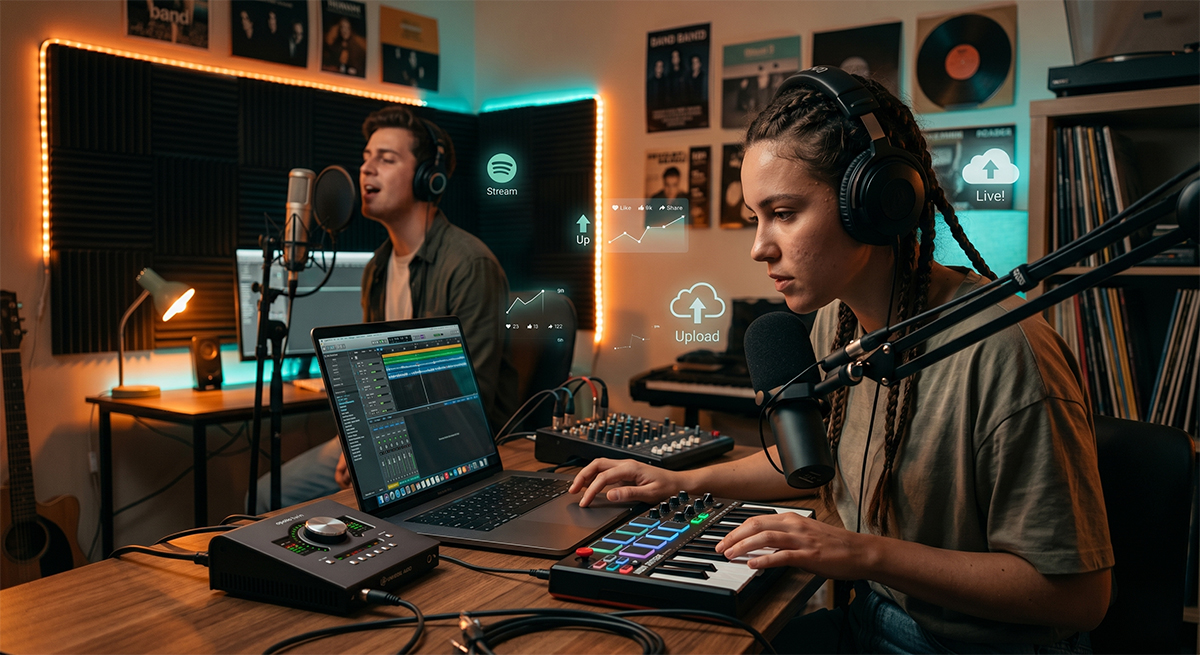
Key Takeaways:
- Artists can now record, distribute, and promote music globally without a label. Online platforms give indie musicians creative control and access to fans.
- Independent artists earn from streaming, live shows, merchandise, crowdfunding, and direct fan support. Diversifying income is key to sustainability.
- Platforms like TikTok, Instagram, and YouTube let artists build audiences and engage fans directly. Viral posts can rapidly boost exposure.
- The global independent artists market is booming (e.g. ~$105B in 2024, forecast to $149B by 2029). Indies now account for over half of recorded music sales worldwide.
- Indie artists handle their own marketing, finances, and promotion. They must network in the music industry, stay organized, and sometimes even hire tour managers or booking agents to scale up. Tech tools can help automate admin tasks so musicians focus on creativity.
- The rise of independents is shifting power from labels to creators. Streaming payouts and royalty reforms increasingly favor artists, while creators launch new business ventures (like booking agencies or their own labels).
- Independent professionals often use tour management software and music business management tools to coordinate gigs and collaborations. Even small teams (booking agents, tour managers) rely on integrated platforms to handle logistics and grow careers.
Introduction
Once dominated by major labels, the music industry is seeing a fundamental shift: independent artists (DIY musicians without traditional record deals) are taking center stage. The internet age has democratized music – any songwriter can record a hit, upload it to Spotify or YouTube, and instantly reach millions. This means artists keep creative control and larger revenue shares than ever before. For example, the independent artist market was valued at around $105 billion in 2024 and is growing at ~7% annually. Industry analysts note that indie musicians now make up more than half of the global recorded music market.
This trend is powered by digital platforms, fan support, and a direct-to-fan ethos. However, it also places new responsibilities on artists – they often act as their own marketers, hire a tour manager or even launch a booking agency, and master the business side. In this article, we’ll explain how indie artists thrive independently, the tools they use, and what this means for the music business. We’ll touch on key strategies –
Digital Platforms and Tools Empower DIY Artists
The internet has opened up an unprecedented toolkit for musicians. Today’s independent artists don’t need a label to distribute music. Streaming platforms like Spotify, Apple Music, and SoundCloud allow anyone to upload songs at low cost. One benefit is global reach: by 2024, streaming services had over 600 million users worldwide, giving indie musicians access to a huge audience. Additionally, most platforms provide real-time analytics. For instance, Spotify for Artists lets creators see where their listeners are located, helping them plan tours or target promotions effectively.
Social media platforms are equally crucial. Instagram, TikTok, and YouTube let artists connect directly with fans. Engaging content (like videos of music production or personal stories) can build loyal followings. Viral TikTok trends have catapulted unknown artists into stardom, illustrating how a single creative post can unlock a global audience. These tools also enable networking: artists can tag collaborators, message promoters, and announce releases instantly. The overhead is low: social media promotions are often free or affordable, fitting independent budgets.
Crowdfunding platforms (Patreon, Kickstarter) further boost indie success. Fans contribute to projects directly, often receiving exclusive perks in return. For example, Amanda Palmer famously raised over $1 million on Kickstarter for her album, proving that independent fundraising can rival traditional advances. This direct support not only provides capital but also deepens fan engagement – supporters feel invested in the music’s creation. Overall, modern music booking software and tour planning platforms (like those provided by YourTempo) integrate with these tools, so an artist can schedule releases and shows around a fan funding campaign.
Revenue Streams and Financial Independence
Independent artists diversify how they make money. Streaming royalties, while debated for fairness, offer base income and exposure. According to industry research, streaming accounts for about 42% of indie artists’ revenue today. Yet because streaming payouts per play can be low, artists expand beyond it. They sell physical merchandise (apparel, vinyl) at shows and online; merchandise revenue is growing rapidly in the indie market. The Mordor report notes merchandise and direct-to-fan sales are the fastest-growing segments.
Live performances are also vital. Independents often organize their own tours or work with smaller promoters. Having a tour manager – even if they’re part-time or freelance – helps coordinate venues, logistics, and promotion. This ensures concerts are financially worthwhile. Smaller sets and virtual concerts (live-streamed shows or platforms like Twitch) open up new earning methods and global fan interactions.
Licensing and publishing represent another revenue frontier. Indie artists today often manage their own music publishing or hire firms to place songs in TV, games, and ads. Since they own more rights, licensing deals directly enrich the artist. And some use tech innovations: blockchain-based royalty tracking or fan-subscription services (like Patreon or Songfinch) to ensure payment transparency and steady income.
In summary, independent musicians keep more of their earnings because they own their work. This financial independence is a huge draw. But it also means they must handle invoicing, accounting, and tax, often with small teams or software tools. For example, integrated platforms (tour management software) can track show deposits and merchandise sales, reducing admin burdens so artists can focus on creativity.
Independent Market Growth and Industry Impact
The independent artist market is enormous and growing. Industry estimates put it at over $160 billion in 2025, rising to $233 billion by 2031. Indies now command more than half of recorded music revenue globally. This shift reflects a structural change: creators retain larger revenue shares as platforms replace labels. Streaming, once label-dominated, now democratizes distribution.
New royalty models are also underway: user-centric payouts (like Spotify’s 2024 rule requiring 1,000 annual streams to earn) benefit tracks with engaged audiences. Artists no longer rely on pooled, label-controlled royalties. Moreover, favorable copyright reforms (e.g. mechanical royalty increases) funnel more money directly to songwriters.
Because of these trends, traditional gatekeepers are losing power. Labels still invest in some artists, but many find success independently. Booking agencies and managers are adapting: some have launched boutique services for indie acts, while promoters now work directly through tour planning software with DIY artists. Even large festivals scout unsigned talent on social media rather than solely through agents.
However, challenges remain. Research notes the paradox of democratisation: while artists can reach markets independently, oversaturation means it’s harder to stand out. Every song released is one of millions, so effective marketing and networking are crucial. Indie artists must juggle creative work with business tasks.
Empowering Independence with Technology
Technology is at the heart of this revolution. As independent artists multiply, many turn to specialized tools to manage their careers. Music booking management software is used not only by agencies but also by indie managers to handle gig offers and contracts. Similarly, tour management software helps schedule shows and coordinate crew, crucial when an indie artist “launches a booking agency” or self-manages tours. Using these tools, one can automate communications, avoid double-booking, and ensure timely payments.
Analytics platforms are also widely used. By analyzing streaming and social data, artists plan tours in cities where they have real demand, maximizing ticket sales. For instance, Spotify for Artists and Bandsintown integrations let artists sync confirmed dates with fan calendars. Independent artists who leverage data can often act like seasoned label-backed stars.
Networking and collaboration tools are more important than ever. Independent pros often network online (social media, forums) and at events to find collaborators (songwriters, producers) or business partners. Booking agents or talent buyers may exist in-house or be hired per project. Networking in the music industry – being active on LinkedIn, attending conferences – can lead to partnerships or even launching a boutique label or booking agency around a collective of indie talents.
In summary, the rise of independent artists has been fueled by creative freedom and tech-enabled autonomy. Modern platforms allow musicians to own their careers end-to-end. While this means greater responsibility, it also brings greater reward: many indie artists now build lasting careers on their own terms.
Independent musicians are thriving like never before, thanks to online platforms and technology. Without big-label contracts, solo artists can record, release, and market their music globally using streaming services, social media, and crowdfunding. This shift has made the indie market enormous (over half of global music revenues) and given artists more creative freedom and income streams. But it also means DIY musicians must manage everything themselves.Modern booking and tour management platforms help by automating tasks so creators can focus on music. This comprehensive post explores the trends, tools, and strategies enabling independent artists’ success and how it’s transforming the industry.
Frequently Asked Questions
Q. 1 What defines an independent artist?
A: An independent (indie) artist is a musician who releases and promotes music without a major record label. They may self-fund or use small labels, and they typically handle their own marketing, distribution, and touring (often with hired helpers like booking agents or tour managers). Independence means creative and financial control over their work.
Q.2 Why are so many artists going independent?
A: Digital tools and platforms have made it easier to produce and distribute music without a label. Artists keep more revenue (no label splits) and retain creative freedom. Crowdfunding and direct-fan support also allow projects to be funded independently. Many see it as a trade-off worth making for autonomy and a larger share of earnings.
Q.3 How do independent artists make money?
A: Indie musicians earn through multiple channels: streaming royalties, live performances, merchandise, crowdfunding (Patreon/Kickstarter), sync deals, and direct music sales. They often sell merch at shows or online, use fan subscriptions, and license music for films/ads. Diversifying income streams is key since streaming alone yields little.
Q.4 What challenges do indie artists face?
A: They must handle tasks a label used to cover: marketing, finances, booking, and promotion. Building a fanbase requires strong networking, both online and offline. Independents need to learn business skills – managing royalties, accounting, or using tools like tour planning software to avoid errors. Competition is fierce, so staying organized and persistent is vital.
Q.5 How does this trend affect record labels?
A: Labels are adapting by partnering with successful indies or providing distribution-only deals. As the indie market grows (now over 50% of music revenue), traditional labels focus more on big hits or signing independents after they prove themselves. In general, labels have less gatekeeper power and must offer more flexible contracts to attract talent.
Q.6 What internal tools help independent artists succeed?
A: Platforms like YourTempo’s suite are examples: they offer tour management software and music business management tools to organize bookings, calendars, and finances. Such tools automate scheduling, contracts, and communication. Using these, indie teams avoid mistakes (no double-booked shows, for example) and appear as professional as big agencies.
Q.7 How can networking help an indie career?
A: Networking in the music industry is vital. By connecting with fellow artists, venue owners, promoters, and even launching a booking agency or collaborating on projects, indie musicians can gain exposure. Personal relationships can lead to collaborations, gigs, and even investor interest. A strong network often translates directly into career opportunities in today’s indie-driven market.